How to Dress Best for Winter Cycling
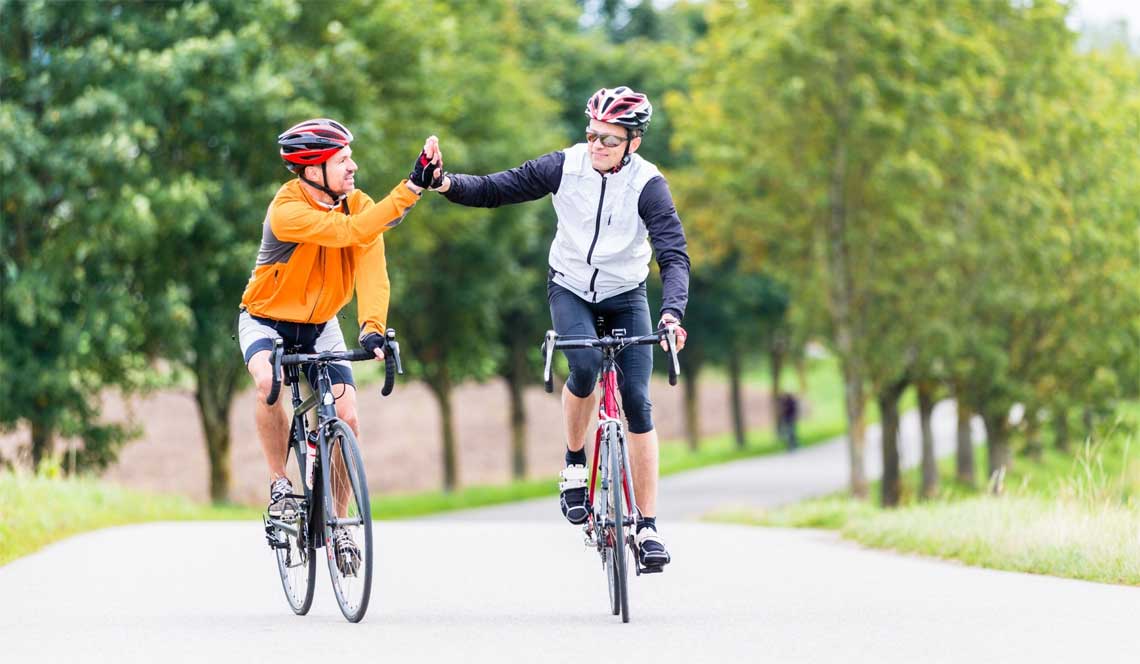
Just because snow and ice have emerged on the scene, that doesn’t mean that you have to hang up your bike until springtime. It is definitely possible to get on your bike and ride during wintertime weather, as long as there isn’t so much snow and ice that it becomes impossible or totally unsafe. Part of biking effectively and safely during winter does, however, require specific clothing.
Dressing properly will help you to avoid dehydration, protect your skin from the sun (which is still around and still casting potentially harmful rays), and keep your skin from becoming agitated by the cold. In this article, we’ll give you a few tips to help you stay safe, warm and dry when you break out your bike during the winter season.
What Should You Wear When Bike Riding in Winter?
Dressing properly is the best way that you can safeguard your health when wintertime biking is on the agenda. Here are 6 tips to help you gear up appropriately when the temperatures drop, and snow makes its presence known.
Protect Your Eyes
 Winter winds and whipping snow can seriously impede a person’s ability to see when they are on the biking trail. Also, you’ve probably experienced “snow blindness” if you live in an area that receives any amount of snowfall. Sunlight glinting off the pure, white powder can be dangerous if you’re operating any type of vehicle. Goggles or some type of sunglasses can be called for, depending on the circumstances the person is riding in.
If you wear prescription eyeglasses, you’ve got little choice but to wear them while riding. Prescription sunglasses can help on those bright, wintry days. But if you’re worried about snow and cold air keeping you from seeing adequately, you may need to wear your personal glasses under a pair of goggles.
Layer Your Clothing
You’re probably already familiar with the concept of layering clothes to keep yourself warm in the winter. But did you know that you can prevent overheating during your bike riding sessions by layering, as well? The physical exertion behind riding can cause you to warm up as the session goes on. The day might warm up, or it might get colder. It always pays to have at least two layers of clothing accessible to you during your ride:
- A warm but lightweight, moisture-wicking layer of clothing that is closest to the skin.
- A wind proof outer layer that will protect your skin from the chill of the winter’s winds.
Being able to remove and put on an added layer of warmth is a very good idea, as you don’t want to compromise your health this way. However, this can be different for ice bikers who go riding on remote trails.
Oftentimes, it is the bottom layer – the moisture wicking layer – that needs to be removed in the winter, not the outer, windproof layer. You’re not going to be wanting to take off all of your layers just to get this one off, not if you don’t have somewhere to change that’s away from the elements. For more casual bikers who have access to spots where they can warm up and take a break, layering can be much more practical.
Wear Headgear
Your head is one of your body’s key radiators of heat, so wearing headgear that covers the top of the head completely can actually help you to regulate your body heat. If you feel that you’re overheating on your ride, you can take off your helmet and allow some of the heat gathered between your scalp and the helmet to dissipate for a moment. A helmet can also help you to stay warm, for the same reason, when the chill starts to get to you.
Don’t Be too Proud
 If you’re newer to wintertime biking, you might not yet know how to read the weather and plan accordingly. After all, nobody is born with this knowledge. Don’t let your pride keep you from backtracking a bit to apply an extra layer or item if it’s necessary. It takes a lot of practice and understanding of the weather to know what to wear instinctively during the winter, so you’re likely to make some wardrobe mistakes at first. And that’s okay!
Choose the Right Materials
When sweat and ice-cold temperatures enter the equation at the same time, it can be difficult to figure out what fabrics are best to wear. While we’ve emphasized the importance of water wicking and windproof layers, there are some “don’ts” that you should keep in mind when choosing your biking winterwear.
- Avoid wearing cotton, especially close to the skin. It absorbs moisture and keeps that moisture next to the skin. When sweat is still on the skin, you will start to freeze the second you take a break or even a small pause.
- Don’t assume that everything has to be labeled as “great for cycling.” Though the market for ice bikers is growing in terms of apparel, there are few clothing items that are marked this way and work in winter. Consider looking at ski clothing.
8 Reasons to Get on the Bike and Ride – Today
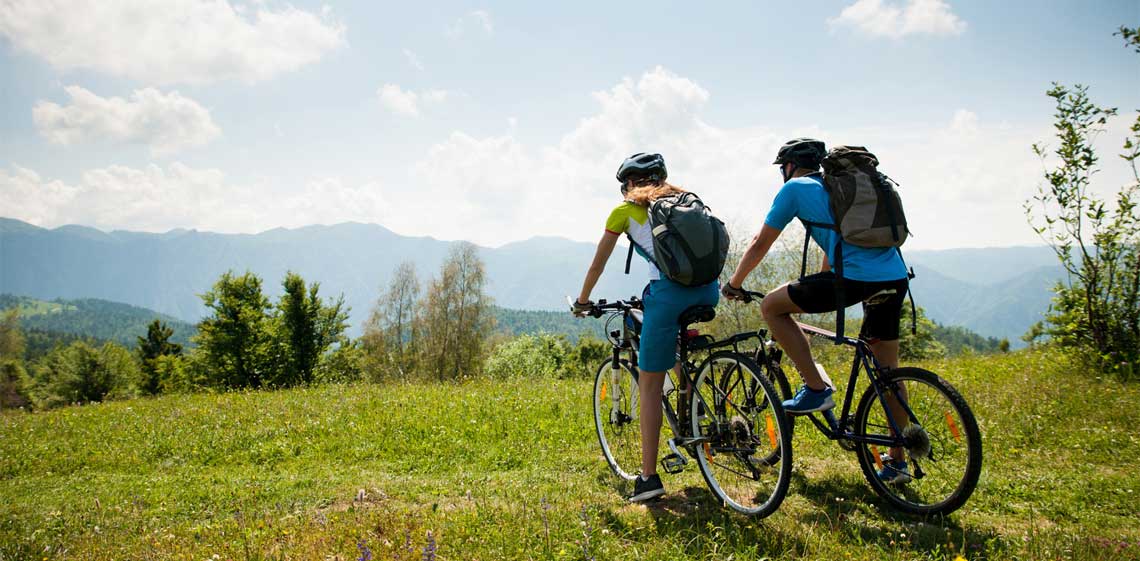
In the fast-paced world we live in, it’s all about getting from point A to point B in excellent time. Cars, buses and motorcycles are the go-to means of transportation for many of us, as they get us where we need to go faster than any other medium. But in this health and environmentally conscious time we live in, more and more people are choosing to ride a bicycle where they need to go, whenever possible. Bike riding has also reemerged as an incredibly popular pastime during the more favorable seasons.
So, why is bike riding surging back into heightened popularity? Well, there are many reasons for this. But instead of listing them all (and taking forever to do so), we’ve decided to highlight 8 of our favorite reasons to get on a bike and ride.
Why is Bike Riding so Good for You?
Everyone knows that riding a bicycle is a great way to get in some exercise. Exercise boosts a person’s mood, increases physical fitness, and benefits every system within the body. But there are other benefits to bicycle riding that you should know about, if you don’t already.
Save Money by Commuting via Bike
It’s no secret that cars are expensive, and bus or rideshare fees can stack up pretty quickly. If you live and work in an area where bicycling is something that you can reasonably do, you stand to save some money by commuting on your bicycle whenever possible. This can greatly reduce how much you spend on gas and routine maintenance on your personal vehicle, as well.
Increase Your Vitamin D Intake
 Unless you’re spending a lot of time outside or taking a vitamin D supplement, there’s a very good chance that you aren’t getting enough of this essential vitamin in your life. A lack of vitamin D is one element that is suspected to contribute to the emerge of seasonal depression – when the days are short, and the nights are long. Low vitamin D is also associated with certain cancers and heart disease.
While bike riding won’t save your life, an increased amount of vitamin D in your body will help you to have a higher quality of life. And you get this benefit from spending only 15 minutes on a bike each day!
See the Locals When on Vacation
When you travel to a new location, you’re going to want to immerse yourself into the life that bustles around you. While there are many great sights to see from the comfort of a car or guided bus tour, there’s nothing quite like getting on a bike and riding through the avenues of a new city – or even a more rural setting. Many locations give visitors the opportunity to rent a bike and go on a tour. These tours can be self-guided or offered by a licensed guide.
Regardless of which type of tour you embark on, doing so atop a bicycle is a great experience that you should try out at least once.
Get Acquainted with Your Own Neighborhood
If you’ve only ever driven or been driven anywhere in your own neighborhood, there’s probably a lot that you aren’t seeing. After all, a car can’t go everywhere, can it? Riding a bike, even casually down the streets of your neighborhood, will afford you a chance to see what passes you buy when you’ve got four wheels and an engine taking you where you need to go.
Enjoy Low Impact Exercise
Running, for example, is a great way to move but can wreak havoc on joints if you’re not the most physically active person or if you have a condition that negatively impacts joint health. Bicycling is much more low impact in comparison to running, which is explosive and dynamic. The more fluid movements associated with bike riding can still cause some aches and pains, but nowhere near as badly as running. You’re much less likely to damage ligaments and tendons when you take up bike riding over running.
It’s Easy to Monitor Progress
Courtesy of a world of exercise-tracking apps on smart phones and watches, you can track your progress in real time! Isn’t it satisfying to see how far you’ve progressed in your fitness endeavors? It was hard to do this before the technological innovations in smart technology. It’s easier than it’s ever been to monitor your progress and push yourself to be better and better each day.
Do Your Part in Helping the Environment
It’s no secret that the environment is in trouble, so many of us are trying to minimize our carbon footprint and reduce emissions in our own ways. For those who can, bicycling more often than riding in a car is a small but important step forward. In the United States alone, nearly 1/3rd of all emissions are caused by motor vehicles. While one person riding a bike instead of driving won’t save the world, it can be a small part of a larger effort on the part of an entire community.
Anybody of Any Size Can do it
Those of any weight – from very slim to morbidly obese – can successfully ride a bike and get the benefits that we’ve got listed above. While it might take some time to build up your stamina and endurance, you might be astonished at how great you feel when you get into the swing of things. You don’t need to be a fitness buff to ride a bike and get healthier this way. All you need is the determination and a bicycle that you feel comfortable riding.
Don’t let anything stop you from bike riding. Chances are you did it when you were a kid, and it really is as they say – it’s easy to get back on. If you haven’t ridden in a while, there might be some time where you need to get comfortable again. But once you do, you and your body stand to benefit from it!
Reboot – Oregon Cycling is for
We are about anybody who likes to ride a bike, who wants to explore outdoors and who loves traveling. There might be some enthusiasts, and there might be some casual riders, and thee might be some wanderer who might not even care for riding a bike, but just love being outdoors. Everyone is welcome and we want to provide any information we can.
We currently don’t have any plan to create a hard copy magazine. It looks like there was a magazine awhile back, but we are planned to be strictly online. Give us some love when you can and if you have ideas on what info would help, let us know. We’d love to grow the site and we hope you come along on the ride.
We are thinking about covering general travel around Oregon as well as other parts of the world. Could be Hawaii, could be Japan, could be East coast.
Following is the excerpt from the last publisher. They’ve done a marvelous job and we aren’t really sure if we can have have the same level, but hopefully we can carry on the torch. Cheers
The other day, someone asked me about the “target” audience for Oregon Cycling. Hardcore cyclists? I thought about it for half a second and then thought, “of course not! Oregon Cycling is the voice of the everyday cyclist!” That is what I have strived for in editing Oregon Cycling since 2002. Sure, some articles might appeal to racing geeks, others to policy wonks, but in general, my goal for Oregon Cycling was to put together a publication that would appeal to anybody who rides a bike. Unfortunately, the last few months have been rough, and we are no longer able to produce Oregon Cycling as a labor of love.
In some ways, the culture has outgrown the need for a hard copy bike news magazine. Information is everywhere online if you know how to look for it. Print can’t compete with the web in that department. Often the newspaper you receive in the morning is out of date by the time it hits your doorstep. In the sluggish world of semimonthly publishing, this news delay is particularly noticeable. At one time, much of the information on cycling that you can get online was all underground, not really a part of the mainstream media, and Oregon Cycling was the organ for that expression of culture. Now that the internet IS mainstream, the poor old print magazine seems like an anachronism. Despite everything, the decision to shutter Oregon Cycling was a difficult one. Should the magazine continue online? As a quarterly? An annual? There are models for all of these, yet we finally decided that it would be best to go out with a final print issue rather than take the magazine in a new direction. The potential exists for Oregon Cycling to make a comeback, but we decided that leaving the magazine “as-is” would be the best way to preserve it. I hope that someone will want to take the reins (or the handlebars) and breathe new life into Oregon Cycling, but until then, we want to thank you for reading and we wish you many happy rides.